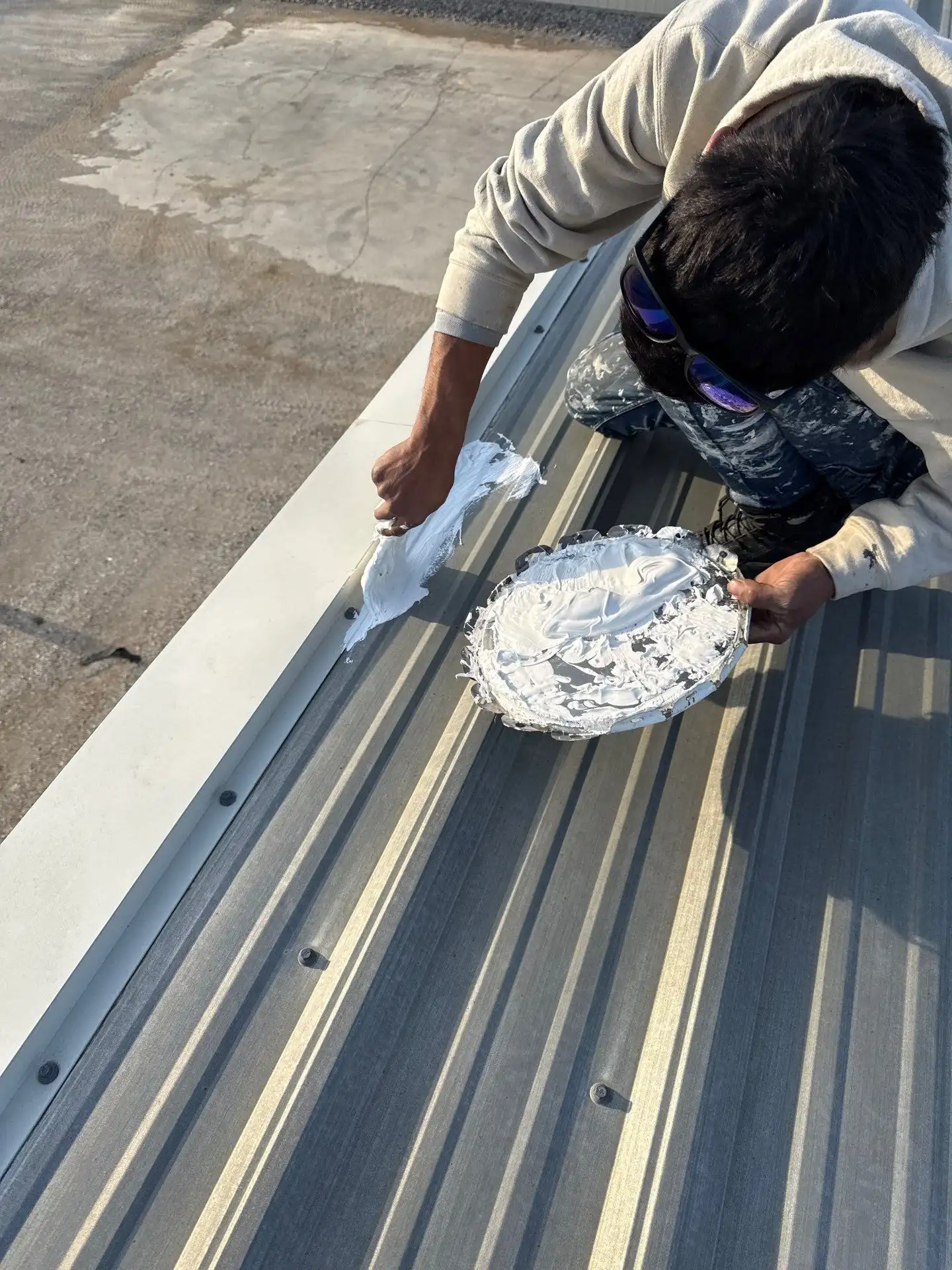
The commercial hail inspection process
A professional hail inspection follows a thorough process, and for a Saddle Creek property manager, knowing what it involves clarifies what to expect and why it matters. The goal is to identify all the damage hail caused and document it clearly.
Examining the roof surface closely
The inspection examines the roof surface closely for the signs of hail, bruising, fractures, granule loss, and impact marks, across the whole roof rather than a few spots. Close examination finds what is hard to see. For a building, the surface examination is the core of a hail inspection, since much of the damage is subtle and only apparent on close inspection. The inspector covers the roof systematically, checking for the various forms of hail damage so that nothing is missed, which matters because hail damage can be scattered and uneven across a roof depending on how the storm struck.
Checking flashings, metal, and seals
The inspection checks the flashings, edge metal, and seals, since hail commonly dents and damages these components, and they are frequent leak points. Their condition matters for both function and documentation. For a Hamilton County building, examining the flashings and metal components is an important part of the inspection, since damaged or dented metal both compromises the roof's watertightness and provides clear evidence of hail impact. The inspector evaluates these components for damage that needs repair and for the marks that document the storm's effect, both of which factor into the roof's condition and any claim.
Inspecting rooftop equipment
The inspection includes the rooftop equipment, since hail damage to HVAC units, vents, and housings both affects the equipment and provides further evidence of the storm. Equipment is part of the full picture. For a Saddle Creek building, inspecting the rooftop equipment alongside the roof captures damage that might otherwise be overlooked and adds to the documentation of the storm's intensity. The equipment is exposed to the same hail as the roof, so its condition reflects the event, and damage to it is part of the complete assessment of what the hailstorm did to the rooftop.
Identifying and marking damage
As damage is found, the inspector identifies and marks it, often with chalk or markers, so the affected areas are clearly indicated for documentation and any later work. Marking makes the damage visible and countable. For a building, marking the hail damage during the inspection serves the documentation, since marked impacts can be photographed and counted, which supports a clear record of the damage. This step turns a scattered set of subtle impacts into a documented pattern, which is useful both for understanding the roof's condition and for any insurance claim that follows the inspection.
Assessing the roof's overall condition
Beyond the hail damage, the inspection assesses the roof's overall condition, since the age and state of the roof factor into the repair or replacement decision and how a claim may proceed. Context matters. For a Hamilton County building, assessing the roof's overall condition alongside the hail damage gives a complete picture, since the right response to hail depends partly on the roof's age and existing state. An older roof with significant hail damage may warrant a different decision than a newer one with limited damage, which is why the inspection considers the roof as a whole, not just the storm's impact.
Producing a clear report
The inspection concludes with a clear report documenting the findings, the damage identified, its locations, and supporting photographs, which the owner can use for decisions and for a claim. The report is the deliverable. For a Saddle Creek building, a clear inspection report is valuable, since it records the roof's condition and the hail damage in a form the owner can act on and share with an insurer. The report turns the inspection into usable documentation, giving the owner an organized account of the damage rather than a verbal summary, which supports both repair decisions and the claim process.
What a thorough inspection delivers
A thorough hail inspection examines the surface, flashings, metal, and equipment, identifies and marks the damage, assesses the roof's overall condition, and produces a clear report. For a property manager, this process delivers a complete picture of the hail damage and the documentation needed for decisions and a claim, which is why a professional inspection is far more useful than a quick look from the ground after a storm.
The pattern of hail damage across a roof often tells the story of the storm, with the heaviest impacts on the slopes and surfaces that faced the hail and lighter damage elsewhere. For a Saddle Creek building, understanding this pattern during an inspection helps confirm that the damage came from the storm and shows where the roof was hit hardest, which informs both the documentation and the repairs. A thorough inspection reads this pattern across the whole roof rather than assuming the damage is uniform.
Every hailstorm and every roof is different, which is why a professional inspection matched to your specific building serves you better than assumptions about what hail does in general. The roof's system, age, and condition, combined with the particular storm, determine what damage occurred and what the roof needs. Saddle Creek Metal Roofing assesses the specific situation of your Saddle Creek commercial roof after hail, so the response fits your building rather than a generic expectation, which is what protecting your roof properly after a storm requires.
The pattern of hail damage across a roof often tells the story of the storm, with the heaviest impacts on the slopes and surfaces that faced the hail and lighter damage elsewhere. For a Saddle Creek building, understanding this pattern during an inspection helps confirm that the damage came from the storm and shows where the roof was hit hardest, which informs both the documentation and the repairs. A thorough inspection reads this pattern across the whole roof rather than assuming the damage is uniform.
Get a thorough hail inspection
Saddle Creek Metal Roofing performs thorough hail inspections of Saddle Creek commercial roofs, documenting the damage clearly and giving you a report you can act on. Call {phone} to schedule a hail inspection after a storm. A thorough inspection is the foundation for protecting your building and pursuing any claim the damage warrants.